

Key Takeaways
- Proper check valve installation directly affects sealing reliability, service life, and system safety.
- Flow direction, orientation, and pipe alignment must be verified before commissioning
- Installation conditions influence cracking pressure, wear rates, and backflow prevention.
- Clean pipelines and correct gasket torquing can help reduce leakage and premature failure.
- Following disciplined installation practices supports long-term operational stability in critical systems.
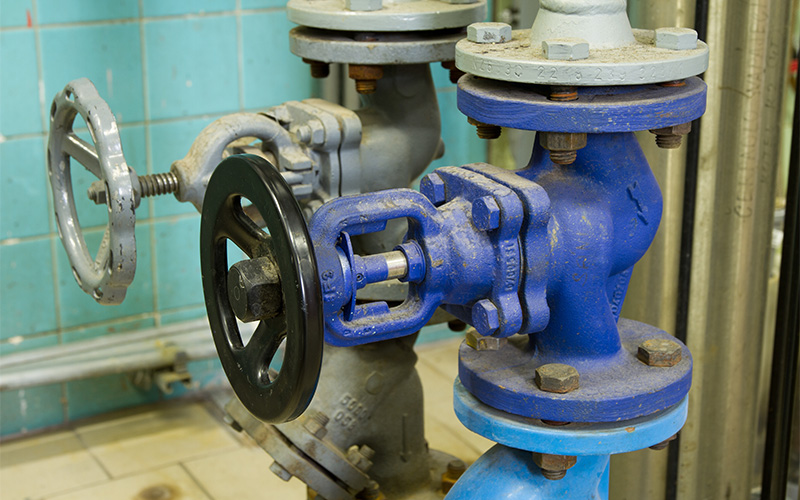
In industrial fluid systems, check valves play a critical role in maintaining process stability and protecting upstream equipment. When installed correctly, they prevent reverse flow, minimise pressure disturbances, and support safe system operation. However, even a well-specified valve can underperform if installation conditions are not properly managed.
This article outlines the key technical considerations engineers and operators should account for to ensure reliable check valve performance from installation through long-term operation.
The Consequences of Improper Valve Installation
1. Backflow and Equipment Exposure
Incorrectly installed check valves may fail to close fully or respond consistently to flow reversal. This can allow backflow to reach sensitive upstream equipment, exposing pumps and compressors to reverse pressure and mechanical stress. Over time, this increases the likelihood of seal damage, bearing wear, or unplanned shutdowns.
2. Unstable Flow and Pressure Fluctuations
Poor orientation or inadequate alignment can disrupt how the internal disc or plates respond to changing flow conditions. This may result in oscillation, delayed closure, or uneven seating, contributing to pressure instability within the system. In dynamic operating environments, these fluctuations can affect process control and overall system efficiency.
3. Accelerated Internal Wear
When check valves are subjected to misalignment, debris, or uneven loading, internal components such as seats, hinges, and discs experience abnormal wear patterns. This reduces sealing effectiveness and shortens service life, often requiring earlier inspection or replacement than anticipated.
4. Increased Maintenance and Downtime
Collectively, these issues translate into higher maintenance frequency and reduced system availability. Corrective actions taken after commissioning are typically more costly and disruptive than addressing installation quality during initial assembly.
What to Consider During Check Valve Installation

1. Confirm the Correct Flow Direction
Check valves are designed for unidirectional flow, and the valve body is typically marked with an arrow indicating the intended flow path. During check valve installation, this direction must align precisely with the system flow. Verifying the orientation before final tightening ensures that the disc or plates open and close as designed, supporting consistent shut-off behaviour once the system is pressurised.
2. Choose the Right Installation Orientation
Check valves can behave very differently depending on how they are mounted within the piping system. While some designs are suitable for both vertical and horizontal installation, others rely on gravity, flow velocity, or disc balance to operate correctly. Understanding these design characteristics is essential during industrial valve setup to avoid performance issues after commissioning.
For example:
- A swing check valve generally performs best in horizontal pipelines, where gravity supports smooth disc closure. When installed vertically, unstable flow conditions may cause delayed closing, disc chatter, or incomplete seating.
- A dual-plate check valve offers a more compact and responsive design, but correct orientation remains important to ensure symmetrical plate movement and consistent cracking pressure.
Installing the valve in its intended orientation is essential for maintaining reliable sealing, predictable response, and long-term operational stability.
3. Ensure Proper Pipe Alignment and Support
Valves are not intended to carry external loads from piping. Misaligned flanges or unsupported pipe sections can impose bending or torsional stress on the valve body once bolts are tightened. As such, proper support is crucial during check valve installation. They carry the combined weight of the valve and adjacent piping, particularly in high-pressure or large-diameter systems.
Maintaining straight pipe runs upstream and downstream helps promote stable flow conditions and supports accurate disc movement during operation.
4. Maintain a Clean Installation Environment
Clean installation practices are particularly important in petrochemical and gas processing systems, where small particles can interfere with seating surfaces or cause scoring of internal components. Welding slag, dirt, scale, or foreign particles left in the pipeline can obstruct the valve disc or plates, preventing full closure.
Before installation, pipelines should be flushed thoroughly, and the valve interior inspected where possible. Protective end caps should only be removed immediately before installation to prevent contamination. In systems handling hydrocarbons, chemicals, or particulates, maintaining cleanliness is especially important to preserve sealing surfaces and moving parts.
5. Apply Correct Gasketing and Controlled Bolt Tightening
Joint integrity depends on both gasket suitability and uniform bolt loading. For example, gaskets must be selected to match the system’s pressure class, temperature range, and process media. Bolts should also be tightened incrementally using a cross pattern and calibrated torque tools. This ensures even gasket compression and avoids flange distortion, supporting long-term sealing stability under operating conditions.
6. Account for Operating Conditions and Flow Behaviour
Check valve installation should reflect how the system will actually operate, not just static design conditions. Flow velocity, cycling frequency, and pressure variation all influence closure response. In systems prone to rapid flow reversal or surge, a non-slam check valve may be specified to reduce pressure spikes and improve operational stability. Considering these factors during installation helps align valve behaviour with broader flow control requirements.
Building Reliable Flow Control from the Start With OTOM Services
During check valve installation, ensuring correct flow direction, orientation, alignment, cleanliness, and joint integrity helps minimise operational risk and extend service life. By addressing these factors early, operators can reduce unplanned maintenance and support more stable system performance across varying operating conditions.
For industrial operators in Southeast Asia and beyond, working with a supplier that understands real operating demands adds an extra layer of assurance. OTOM Services supports oilfield, marine, and petrochemical projects by supplying valves and components suited to application requirements and providing technical post-sales guidance. For more information, contact us today.
Related Articles
Common Symptoms of Check Valve Failure to Look Out For
Check valve failure can introduce risks that extend beyond the valve itself, affecting equipment integrity and system stability. This article outlines key symptoms that signal declining performance and explains their underlying causes. With a clearer understanding of how these issues develop, engineers and maintenance teams can intervene earlier to safeguard assets and maintain reliable system operation.
Exploring the Impact of Globe Valve Size on Flow Efficiency and Pressure Drop
Choosing the right globe valve size is critical to maintaining efficient flow and stable pressure. This article explains how flow regulation principles, pressure limits, and fluid properties influence sizing decisions, helping operators understand why correct selection improves control, protects equipment, and supports long term system reliability across industrial and marine applications. Read on to find out more.