

Key Takeaways
- Lugged and wafer-type butterfly valves differ primarily in mounting method, isolation capability, and mechanical strength.
- A lugged-type butterfly valve supports dead-end service and sectional maintenance, making it suitable for more complex systems.
- Wafer-type valves prioritise compactness and cost efficiency for fixed, lower-load installations.
- Pressure rating, maintenance strategy, and system configuration should guide valve selection.
- Correct specification improves long-term reliability across industrial, marine, and petrochemical operations.
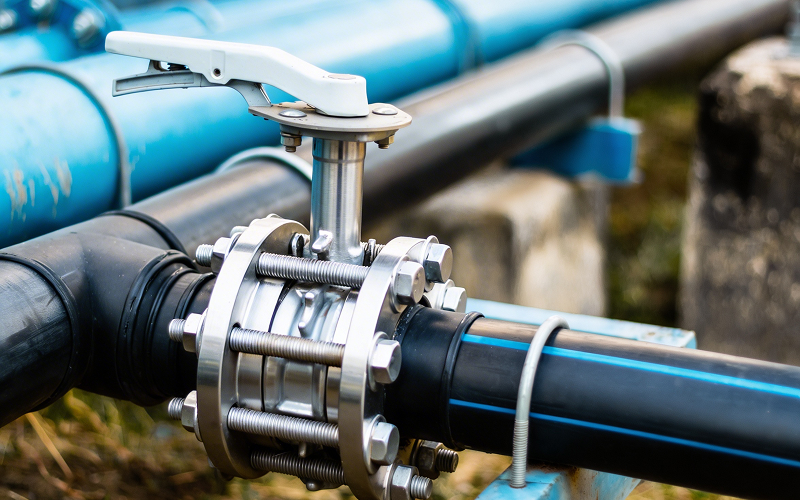
In industrial systems, small design choices often carry long-term operational consequences. Valve selection is one such decision, particularly when comparing wafer and lugged-type butterfly valves. While both designs serve similar flow-control functions, their structural differences influence isolation capability, maintenance planning, and mechanical performance under load.
In this article, we examine the key structural and operational differences between these two types of butterfly valves, helping operators select the most appropriate configuration for their systems.
Lugged Butterfly Valves: Designed for Isolation and Sectional Control
A lugged-type butterfly valve features threaded lugs around the valve body, allowing each side of the pipeline to be bolted independently. This design creates a more rigid connection at the flange connection, improving alignment and mechanical stability under load.
With the valve body actively supporting the pipeline, lugged designs are better able to withstand stressors like vibration, thermal expansion, or uneven loading. This makes them a preferred option in industrial environments where long-term structural integrity is a priority.
Dead-End Service and Maintenance Flexibility
One of the defining advantages of a lugged-type butterfly valve is its ability to support true dead-end service. This allows one side of the pipeline to be disconnected, isolated, or depressurised while the other side remains securely bolted and operational. In practical terms, this capability is essential for systems that require sectional isolation without shutting down the entire line.
In pipeline isolation systems, this design simplifies routine maintenance, inspection, and component replacement. It also supports phased plant expansions or retrofitting work, where new sections are added without disrupting existing operations. For facilities operating under strict safety, uptime, or compliance requirements, the ability to isolate sections reliably reduces both downtime and operational risk during maintenance activities.
Typical Industrial Applications
Lugged butterfly valves are commonly used in applications where mechanical strength, isolation capability, and maintenance access are operational priorities. Typical use cases include:
- Industrial processing lines where pipelines are subject to higher mechanical loads, vibration, or thermal expansion.
- Chemical handling systems carrying corrosive or pressurised media, where secure bolting and reliable isolation help manage safety and compliance risks.
- Marine piping systems, where a robust marine valve is required to withstand vibration, confined installation spaces, and the need for reliable sectional isolation during onboard maintenance.
Wafer-Type Butterfly Valves: Space-Efficient and Economical
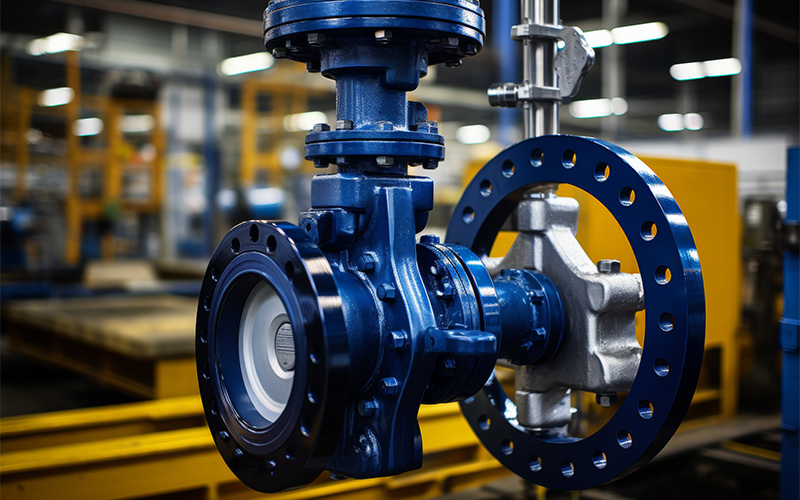
Wafer butterfly valves are installed by positioning the valve body between two flanges and securing the assembly with through-bolts. The valve body does not include threaded lugs and is held in place by the clamping force generated by the flanges. This design results in a compact, lightweight valve that requires less material and occupies minimal installation space.
Pressure Behaviour and Mechanical Considerations
In wafer-type installations, mechanical loads are transferred primarily through the flange bolting rather than the valve body itself. As a result, these valves are best suited for low- to medium-pressure systems where pipeline alignment is stable and axial loads are limited. Wafer designs are not intended for dead-end service and are typically applied where full line isolation or frequent pipe disassembly is not required.
Common Use Cases in Fixed Pipeline Systems
Wafer-type butterfly valves are commonly applied in systems that prioritise compact design and installation efficiency, including:
- Water treatment and distribution networks operating under moderate pressure
- HVAC and building services where space constraints influence equipment selection
- Auxiliary utility lines, such as cooling water or secondary circulation systems
Key Selection Considerations for Engineers and Operators
1. Functional Role Within the System
Engineers should first assess the role the valve plays within the overall process. Valves intended for boundary isolation, system segmentation, or future tie-ins benefit from lugged configurations, while wafer designs are more appropriate for inline flow control within established, continuous systems. Clarifying whether the valve functions as a control point or a system boundary helps narrow the choice early.
2. Design Margins and Operating Envelope
Valve selection should account for both normal operating conditions and abnormal scenarios such as pressure surges, thermal cycling, or temporary line imbalance during shutdowns. Lugged designs provide greater tolerance where higher safety margins are required, while wafer valves perform effectively within stable, well-defined operating envelopes. Considering these margins upfront reduces the risk of over-specification or premature replacement.
3. Maintenance and Standardisation
Maintenance strategy often drives long-term cost more than the initial purchase price. Facilities with modular maintenance practices or strict isolation procedures tend to standardise on lugged designs to simplify access and reduce shutdown scope. In contrast, plants focused on minimal intervention may standardise wafer valves for uniformity and installation efficiency.
Conclusion: Selecting the Right Butterfly Valve Configuration
Choosing between wafer and lugged-type butterfly valves requires a clear understanding of how each design interacts with the wider system. Installation method, pressure demands, and maintenance planning all influence long-term performance.
For industrial operators in Singapore’s oil, marine, and petrochemical sectors, consider working with an experienced supplier such as OTOM Services Pte Ltd. We provide access to proven valve solutions, including Demco butterfly valves, supported by technical guidance to help ensure correct specification and reliable performance across demanding applications.
contact us today to learn more.
Related Articles
Common Symptoms of Check Valve Failure to Look Out For
Check valve failure can introduce risks that extend beyond the valve itself, affecting equipment integrity and system stability. This article outlines key symptoms that signal declining performance and explains their underlying causes. With a clearer understanding of how these issues develop, engineers and maintenance teams can intervene earlier to safeguard assets and maintain reliable system operation.
Exploring the Impact of Globe Valve Size on Flow Efficiency and Pressure Drop
Choosing the right globe valve size is critical to maintaining efficient flow and stable pressure. This article explains how flow regulation principles, pressure limits, and fluid properties influence sizing decisions, helping operators understand why correct selection improves control, protects equipment, and supports long term system reliability across industrial and marine applications. Read on to find out more.