

Key Takeaways
- Valve handles are a critical interface that directly affects safety, control accuracy, and operational reliability.
- Different types of handles are designed to match specific valve sizes, torque requirements, and installation constraints.
- Selecting an unsuitable handle can increase operating effort, accelerate component wear, and raise handling risks.
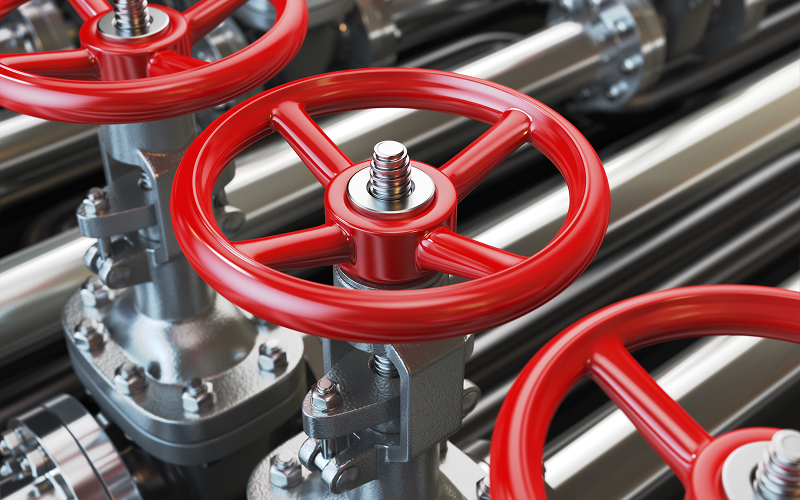
In many industrial facilities, manual valve operation remains essential for isolation, throttling, and system control. The handle is the direct point of interaction between personnel and pressurised equipment, making its design critical to safe and efficient operation. The different types of valve handles are developed to suit specific pressure ranges, operating frequencies, space limitations, and safety requirements. In this article,
Different Types of Valve Handles in Industrial Systems
1. Lever Handles
Lever handles are widely used on ball valves and butterfly valves due to their simple quarter-turn operation. A 90-degree rotation moves the valve from fully open to fully closed, providing fast isolation and a clear visual indication of valve position. This makes lever handles well-suited for applications that require quick shut-off or frequent operation.
From a usability standpoint, lever handles support intuitive manual operation and reduce the likelihood of partial opening or closing. However, their swing radius requires adequate clearance, which must be considered in compact piping layouts. Lever handles are commonly specified for utility lines, skid-mounted systems, and services where fast response is required.
2. Handwheel Handles
Handwheel handles are typically found on multi-turn valves such as gate valves and globe valves. Unlike lever handles, handwheels allow gradual opening and closing, making them suitable for throttling applications and systems that require controlled flow adjustment.
Handwheels provide greater mechanical advantage, allowing operators to apply higher torque with reduced effort. This makes them suitable for higher-pressure systems and larger valve sizes. In industrial facilities, handwheel-operated valves are frequently used for isolation duties, where controlled movement and sealing reliability are priorities.
3. Gear-Operated Handles
As valve size and pressure increase, direct manual operation can become impractical. Gear-operated handles address this by incorporating a gearbox between the handle and valve stem. The gearbox reduces the force required to operate the valve, allowing smooth and controlled movement even under high-load conditions.
Gear-operated systems are commonly paired with large butterfly valves and large-diameter gate valves across petrochemical plants, water treatment infrastructure, and bulk fluid transfer lines. This valve handle type plays an important role in bridging manual operation and more complex valve actuation methods, particularly where powered actuators are not required or not available.
4. T-Handles
T-handles are compact handles typically used on small ball valves and service valves. Their design allows operation in tight spaces where a full lever rotation is not possible. Despite their smaller size, T-handles provide adequate grip for low-torque applications and are commonly used on auxiliary lines, instrumentation connections, and sampling points.
T-handles are typically not specified for high-pressure or high-cycle service, as their shorter handle length limits the mechanical advantage available to the operator. Their primary value lies in space efficiency and straightforward operation, making them suitable for compact installations with limited clearance. They are often applied in systems where compact valve assemblies, such as a flanged ball valve, are installed within confined or densely packed layouts.
5. Locking Handles
Locking handles incorporate mechanisms that secure the valve in a fixed open or closed position. These handles are commonly specified in safety-critical environments where accidental or unauthorised operation could create hazards.
Locking handles are used on both ball valves and butterfly valves in applications involving hazardous media, fuel handling, or restricted access areas. They also support procedural control in operator mechanisms and can help align physical hardware with site safety protocols.
The Importance of Choosing the Right Valve Handle Type
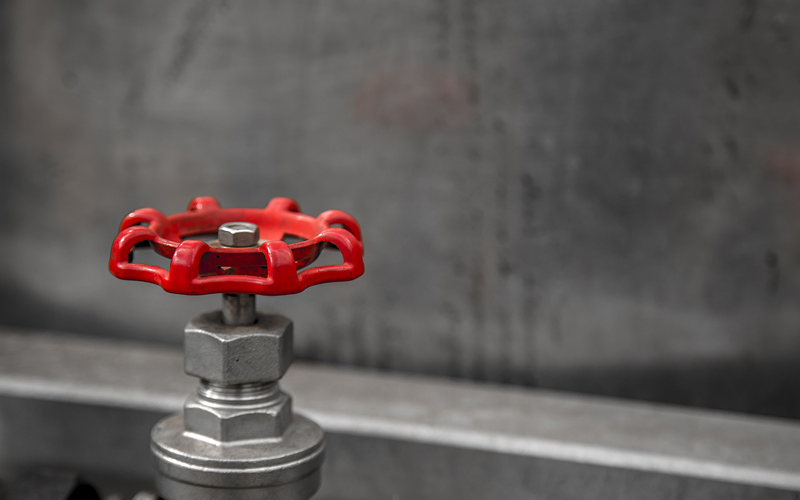
1. Increased Safety Risks and Operator Strain
When valve handle types are not properly matched to valve size or operating conditions, operators may be required to apply excessive force during operation. This increases the risk of slips, sudden valve movement, or incomplete closure, particularly in pressurised systems. Poor handle selection can also lead to operator fatigue during frequent operation, raising the likelihood of handling errors over time.
2. Reduced Control Accuracy and Inconsistent Operation
Incorrect handle design can make it difficult to achieve precise valve positioning. Inadequate mechanical advantage or unclear position indication may result in unintended partial opening or closing, affecting flow control and system stability. These issues are more pronounced during manual operation in emergency isolation scenarios, where speed and accuracy are critical.
3. Accelerated Wear and Higher Maintenance Demand
Handles that do not distribute operating force correctly can place uneven stress on valve stems, seats, and seals. Over time, this accelerates component wear, increases the likelihood of leakage, and shortens valve service life. Improper handle selection often leads to higher maintenance frequency and unplanned downtime.
How to Choose the Right Valve Handle
To specify the appropriate valve handle type, several practical and operational factors must be considered to ensure compatibility with the overall valve and piping system.
1. Valve Size and Operating Torque
The first consideration is the amount of torque required to operate the valve under normal and worst-case pressure conditions. Smaller valves with low operating torque may be suitable for compact handles, while larger or higher-pressure valves often require handwheels or gear-operated systems to ensure controlled operation without excessive force.
2. Operating Frequency and Control Requirements
Valves that are cycled frequently benefit from handle designs that minimise operator effort and provide clear position feedback. Quarter-turn handles are often preferred where rapid isolation is required, while multi-turn handles support more controlled flow adjustment in throttling applications.
3. Space and Installation Constraints
Physical clearance around the valve directly affects handle selection. Lever handles require sufficient swing radius, while compact handles may be more suitable in densely packed pipe racks or enclosed systems. Evaluating available space early helps prevent access and operability issues after installation.
Conclusion
Valve handles play a critical role in how safely, accurately, and consistently industrial valves are operated. Each handle type is designed to address specific torque requirements, space constraints, and control needs, making proper selection an integral part of valve specification rather than a secondary consideration.
At OTOM Services, we support industrial operators by providing technical guidance across valve selection and configuration, helping ensure that valve assemblies are specified correctly for their intended service. To discuss options or review your application needs, contact us today for tailored technical advice and reliable product sourcing.
Related Articles
What Are the Different Types of Valve Handles?
Valve handle types play a key role in how effectively industrial valves are operated. This article examines common handle designs, their mechanical characteristics, and the applications they are best suited for. It also highlights the operational risks and maintenance issues that can arise when handles are poorly matched to valve size or service conditions, helping readers make informed specification decisions.
Common Symptoms of Check Valve Failure to Look Out For
Check valve failure can introduce risks that extend beyond the valve itself, affecting equipment integrity and system stability. This article outlines key symptoms that signal declining performance and explains their underlying causes. With a clearer understanding of how these issues develop, engineers and maintenance teams can intervene earlier to safeguard assets and maintain reliable system operation.