

Key Takeaways
- The decision between 1-piece vs 2-piece ball valves should be driven by serviceability needs, leak risk tolerance, and lifecycle expectations rather than unit cost alone.
- 1-piece ball valves minimise external leak paths and suit straightforward isolation duties where internal access is not required.
- 2-piece ball valves allow internal inspection and seal replacement, making them better suited for systems where planned maintenance is part of operations.
- 3-piece ball valves serve a different role, supporting frequent cleaning or component replacement without removing the valve from the pipeline.
- Effective valve selection aligns design configuration with process criticality, access constraints, and long-term maintenance planning.
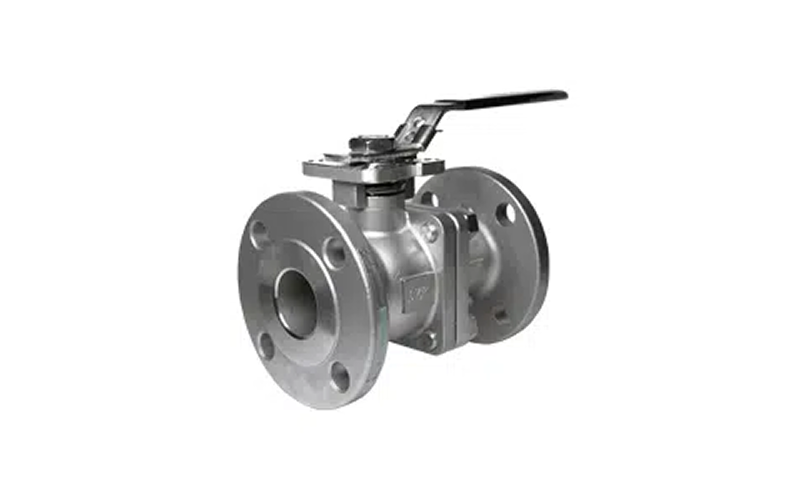
Ball valves are widely used in pressurised fluid handling systems where fast operation and dependable shut-off are critical. While these valves are available in several designs, a common discussion centres on 1-piece vs 2-piece ball valves and which configuration best aligns with maintenance access, lifecycle cost, and system criticality.
This article provides a technical comparison of 1-piece vs 2-piece ball valves, examining differences in body construction, serviceability, and typical use cases.
1-Piece vs 2-Piece Ball Valves: Key Differences
1. Body Construction and Leak Path Considerations
The most fundamental difference between the two types of ball valves lies in their body construction and configuration.
A 1-piece ball valve is manufactured as a single, monolithic body. With no body joints or bolted connections, the design inherently minimises external leak paths. This makes 1-piece valves ideal for low-risk services where simplicity and compactness are priorities. Fewer joints also reduce the potential for loosening under vibration or thermal cycling.
In contrast, a 2-piece ball valve consists of a main body and a threaded or bolted end cap. This introduces an additional body joint that must be sealed effectively. While modern machining and gasket technologies significantly reduce the risk of leakage, the joint remains a design consideration in higher-pressure or safety-critical systems.
2. Serviceability and Maintenance Implications
1-piece ball valves are not designed to be disassembled, and their internal components, such as seats and seals, are permanently enclosed within the body. As a result, these valves are typically treated as disposable components. However, in cases where internal wear, erosion, or contamination affects shut-off performance, replacement is often the most practical solution rather than repair.
By comparison, 2-piece ball valves allow one body section to be removed, providing access to the ball, seats, and seals. This design supports inspection, cleaning, or seal replacement in principle, although in many real-world installations, the valve may still need to be removed from the line to carry out maintenance safely and effectively.
Even so, the ability to service internal components generally supports a more structured valve maintenance approach, making 2-piece valves better suited to mid-criticality services where planned intervention is preferable to full replacement.
3. Cost, Weight, and Space Considerations
1-piece valves are generally lighter, more compact, and lower in unit cost. Their reduced material usage and simpler manufacturing process make them economical for utility services, secondary lines, and non-hazardous media. Additionally, their compact form also benefits installations with limited space, such as skid-mounted equipment.
On the other hand, 2-piece ball valves are slightly heavier and more expensive due to additional machining and sealing components. However, this incremental cost is often offset by longer service life and reduced replacement frequency in demanding environments.
In applications involving larger line sizes or higher pressure ratings, 2-piece designs are more commonly supplied as flanged ball valves. These support improved load distribution, installation stability, and alignment control in rigid piping systems.
4. Performance and Safety Requirements
When evaluating the performance of 1-piece vs 2-piece ball valves, safety and compliance requirements should be considered alongside mechanical design.
For services involving hydrocarbons, elevated temperatures, or fire exposure, specifications may call for a fire-safe ball valve design. These valves are engineered with fire-resistant sealing features and a secondary sealing mechanism (often involving metal-to-metal sealing surfaces and fire-resistant stem sealing) to limit leakage and maintain shutoff capability if primary soft seats are damaged by heat.
Similarly, applications requiring flow diversion or multi-port control often extend beyond standard 2-way valves. In these cases, configurations such as a 3-way ball valve are typically produced in multi-piece constructions, which support precise internal porting, assembly, and, where required, service access.
Where Does a 3-Piece Ball Valve Fit In?

In addition to 1-piece and 2-piece ball valves, 3-piece designs occupy a different role. They consist of two end caps and a removable central body section, allowing the entire internal assembly to be removed while the end connections remain fixed in the pipeline. For systems that demand frequent cleaning, inspection, or component replacement, this configuration significantly reduces maintenance time and line disturbance.
Industries with strict cleanliness or contamination controls, such as chemical processing or hygienic fluid handling, often favour 3-piece valves for this reason. The modular design also supports a wider range of seat materials and seal options, enabling precise matching to media compatibility and operating conditions.
However, the added complexity, size, and cost often mean that 3-piece valves are typically reserved for specialised duties rather than general isolation.
Conclusion: Selecting the Right Ball Valve for Long-Term Reliability
The distinction between 1-piece, 2-piece, and 3-piece ball valves is most relevant at the specification stage, where design choices directly influence risk exposure, maintenance access, and long-term performance. Each configuration serves a different operational profile, and evaluating these differences early helps ensure valve selection remains aligned with system demands throughout its service life.
Working with an experienced supplier such as OTOM Services allows technical requirements to be addressed upfront, ensuring specifications are appropriate for operating conditions and supported by dependable product knowledge. With extensive experience supporting complex industrial systems, we provide practical guidance on valve selection, standards compliance, and application-specific considerations across a wide range of operating environments.
To learn more about what we do, contact us today.
Related Articles
Common Symptoms of Check Valve Failure to Look Out For
Check valve failure can introduce risks that extend beyond the valve itself, affecting equipment integrity and system stability. This article outlines key symptoms that signal declining performance and explains their underlying causes. With a clearer understanding of how these issues develop, engineers and maintenance teams can intervene earlier to safeguard assets and maintain reliable system operation.
Exploring the Impact of Globe Valve Size on Flow Efficiency and Pressure Drop
Choosing the right globe valve size is critical to maintaining efficient flow and stable pressure. This article explains how flow regulation principles, pressure limits, and fluid properties influence sizing decisions, helping operators understand why correct selection improves control, protects equipment, and supports long term system reliability across industrial and marine applications. Read on to find out more.