

Key Takeaways
- Designed for extremely cold conditions, cryogenic valves enable safe handling of liquefied gases used across energy, industrial, and research sectors.
- Material selection, extended bonnets, and sealing integrity are critical to performance at sub-zero temperatures.
- Different valve designs support isolation, throttling, or rapid shut-off depending on process requirements.
- Proper specification is essential for safety, compliance, and long-term operational reliability in cryogenic systems.
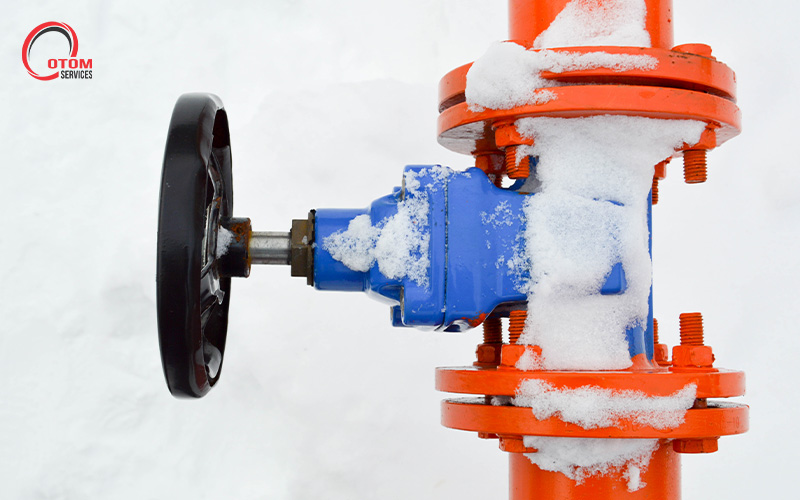
Operating at temperatures below –150°C presents engineering challenges that conventional components cannot withstand. Cryogenic valves are engineered specifically for such environments, where standard metals may become brittle and sealing systems can fail. Manufactured using low-temperature alloys and extended bonnet designs, these valves keep critical sealing elements away from extreme cold while maintaining pressure integrity.
Main Types of Valves Used in Cryogenic Service
Cryogenic systems rely on valves that can be adapted for operation at extremely low temperatures. While the basic operating principles remain the same, their suitability depends on how they integrate into cryogenic process requirements.
1. Ball Valves
Ball valves use a rotating ball with a precision-machined bore to provide quick, quarter-turn operation. Their tight shut-off capability and simple internal geometry make them suitable for on-off service where leakage control is critical, particularly in transfer and isolation points within cryogenic piping systems.
2. Globe Valves
Globe valves regulate flow using a linear motion disc and a stationary seat. This design allows for accurate throttling and controlled flow adjustment, which is important when managing pressure changes and gradual cooling or warming in cryogenic processes.
3. Gate Valves
Gate valves control flow by lifting a vertical gate fully out of the flow path, providing a straight-through passage with minimal pressure drop when open. They are commonly used for isolation in large-diameter cryogenic pipelines where unrestricted flow is required.
4. Butterfly Valves
Butterfly valves use a rotating disc mounted on a central shaft to control flow. Their compact, lightweight design and fast actuation make them suitable for large pipelines and applications where space and weight constraints are important.
What Makes a Valve Cryogenic-Rated?
A valve is considered cryogenic-rated when it is designed and specified to operate reliably at temperatures below –150°C. Key requirements include:
- A defined cryogenic design temperature range
- Bonnet extensions suitable for insulated or cold-box installations
- Materials that retain toughness at low temperatures
- Seat and packing systems that accommodate thermal contraction
- Pressure class and end connections suited to low-temperature service
- Compliance with testing and inspection standards
How Valves Are Adapted for Cryogenic Service
Standard valve designs cannot operate safely at extreme temperatures without significant engineering modifications. To support reliable fluid control, critical design adaptations must be made.
1. Low-Temperature Materials
Cryogenic valve bodies, stems, and internal components are manufactured from materials that retain impact strength and ductility at extremely low temperatures. Austenitic stainless steels, aluminium alloys, and selected nickel-based alloys are commonly used to prevent embrittlement and cracking. These materials allow the valve to withstand rapid cooling, thermal cycling, and sustained exposure to cryogenic fluids without structural degradation.
2. Extended Bonnets and Stems
Extended bonnet designs increase the distance between the cryogenic fluid and the stem packing area. This design limits heat transfer to the sealing system, keeping packing materials at a higher, more stable temperature. By preventing packing from freezing or hardening, extended stems reduce the risk of stem leakage, torque increase, and loss of operability during prolonged cryogenic service.
3. Sealing and Packing Systems
Sealing systems in the valves are engineered to maintain contact pressure despite thermal contraction of metal components. To maintain reliable shut-off and leakage control, sealing and packing systems are specified to account for the following:
- Thermal contraction effects on seats and sealing surfaces, ensuring contact pressure is maintained as components shrink at low temperatures.
- Dimensional stability of the seat and packing materials, allowing seals to accommodate repeated cooling and warming cycles without degradation.
- Fugitive emissions and leakage control, particularly along the stem, through the use of low-emission packing designs where required.
- Media-specific requirements, where certain services may impose additional specifications, such as oxygen service cleaning.
These considerations help ensure consistent sealing performance, minimise leakage, and support safe operation across a wide range of cryogenic applications.
Common Applications of Cryogenic Valves
Across energy, industrial, and research sectors, cryogenic valves are deployed wherever gases must be stored, transferred, or controlled at extremely low temperatures.
1. Liquefied Gas Handling and Distribution
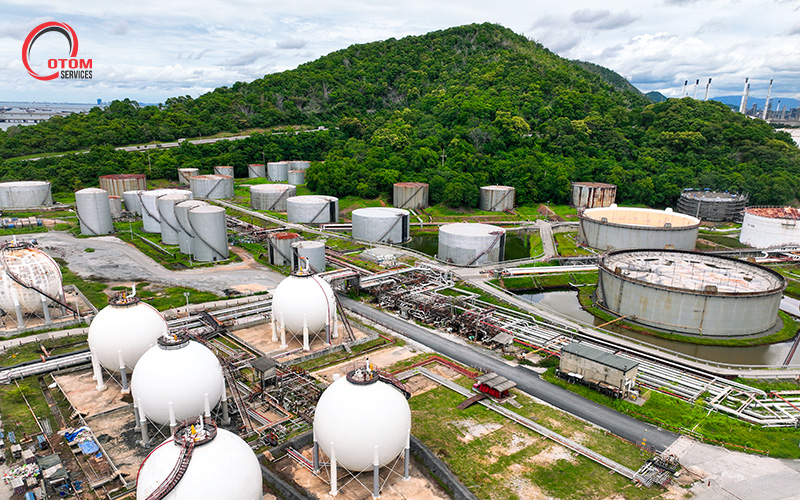
Liquefied natural gas, liquid nitrogen, and liquid oxygen are widely used across power generation, industrial manufacturing, and medical supply chains. These fluids must remain in a liquid state to be transported and stored efficiently, requiring precise isolation and transfer at consistent temperatures.
Cryogenic valves are used at critical points such as loading arms, storage tanks, transfer lines, and vaporisation systems. In these operations, reliable shut-off and controlled flow are essential to prevent unplanned vaporisation, pressure surges, or process disruption during routine operations.
2. Research, Aerospace, and Testing Facilities
Cryogenic environments are integral to aerospace propulsion testing, advanced materials research, and laboratory-scale thermal studies. In these applications, valves are subjected to frequent cycling, controlled dosing, and precise sequencing rather than continuous industrial flow.
Even minor deviations can affect test results or compromise safety protocols, making performance consistency, repeatability, and traceability critical. The valves used in these settings are typically specified to meet strict documentation, inspection, and quality control requirements.
Ensuring Precision In Critical Environments
Selecting cryogenic valves is not a one-size-fits-all decision. Different applications place different demands on flow control, isolation, and operational stability, particularly in environments involving liquefied gases and extreme temperatures. Understanding these requirements is key to avoiding performance issues and unplanned downtime.
With experience supporting oilfield, marine, and petrochemical systems, OTOM Services Pte Ltd supports clients across the full valve lifecycle. From sourcing and system integration to valve servicing and refurbishment, we help engineers and operators ensure reliable performance and long-term operational continuity in diverse environments.
Contact us today to learn more.
Related Articles
Common Symptoms of Check Valve Failure to Look Out For
Check valve failure can introduce risks that extend beyond the valve itself, affecting equipment integrity and system stability. This article outlines key symptoms that signal declining performance and explains their underlying causes. With a clearer understanding of how these issues develop, engineers and maintenance teams can intervene earlier to safeguard assets and maintain reliable system operation.
Exploring the Impact of Globe Valve Size on Flow Efficiency and Pressure Drop
Choosing the right globe valve size is critical to maintaining efficient flow and stable pressure. This article explains how flow regulation principles, pressure limits, and fluid properties influence sizing decisions, helping operators understand why correct selection improves control, protects equipment, and supports long term system reliability across industrial and marine applications. Read on to find out more.