

Key Takeaways
- When it comes to gate valves vs globe valves, understanding their core differences can help engineers choose the right solution for efficiency and reliability.
- Gate valves suit simple on off duties, while globe valves excel at precise flow regulation.
- Correct valve selection supports safer operation in high-pressure pipeline systems and reduces long-term maintenance needs.

Selecting the right valve can involve numerous factors, especially when the system must operate safely, consistently, and cost effectively. More often than not, the dilemma falls to gate valves vs globe valves, two of the most widely used industrial options. By understanding their distinct strengths, how they work and where they perform best, you can make informed decisions that support smooth operations and fewer disruptions.
1. Design and Operation
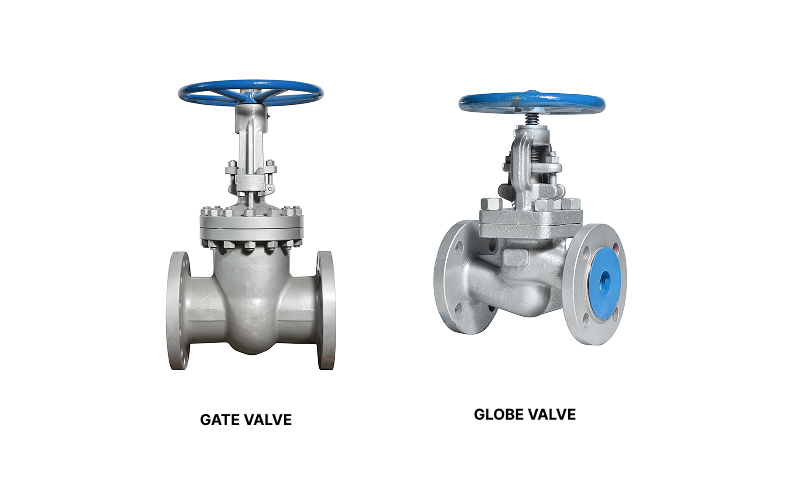
At a glance, gate and globe valves may look similar, yet their internal designs differ significantly.
Gate valves use a flat or wedge-shaped disc that moves vertically up and down. When the gate is fully raised, flow passes straight through with little obstruction. When lowered, the gate blocks the flow completely. This simple motion makes gate valves easy to understand and operate, particularly in systems where the valve remains either fully open or fully closed for long periods.
Globe valves, on the other hand, rely on a plug and seat mechanism. The flow path changes direction inside the valve body, allowing the plug to move closer to or further from the seat. This structure enables finer control over how much fluid passes through, making globe valves a key component amongst process control valves used in regulated environments.
2. Flow Control Characteristics
Flow behaviour is often the deciding factor when considering gate valves vs globe valves.
Gate valves are ideal for on/off control. Because the flow path is straight when the valve is open, pressure loss is minimal. This characteristic is especially useful in long pipelines where maintaining flow efficiency matters. However, gate valves are not designed for throttling. Using them partially open can cause vibration and wear.
Globe valves are built for accuracy. Their design allows operators to adjust flow rates gradually and precisely. This makes them suitable for applications requiring careful isolation and regulation, such as dosing, temperature control, or balancing flows within a system. The trade off is a higher pressure drop compared to gate valves, due to the more complex internal flow path.
3. Pressure and Maintenance Considerations

Pressure conditions and maintenance expectations also influence valve selection.
Gate valves provide full-bore flow, meaning the internal diameter matches the pipeline. This reduces turbulence and simplifies inspection and cleaning, particularly in clean service environments. In demanding applications, options like a Demco gate valve are often selected for their robust construction and suitability for large diameter lines.
Globe valves are better equipped to handle higher pressure differentials. Their seat and plug arrangement can withstand significant pressure changes, but this precision comes at a cost. The seats experience more wear over time, so globe valves may require more frequent inspection and servicing to maintain performance.
4. Industrial Applications

Each valve type has found its place across industries.
Gate valves are commonly used in pipelines, oil and gas installations, and water treatment plants. Their main role is isolation, allowing sections of a system to be shut off safely for maintenance or emergencies. For buyers comparing options from various gate valve suppliers, ease of operation and compatibility with existing pipework often guide the final choice.
Globe valves appear more often in chemical processing, power generation, and marine environments. In shipboard systems, a marine globe valve is valued for its ability to control flow accurately despite changing pressures and operating conditions.
Ultimately, the gate valve vs globe valve debate is not about finding a better or worse option, but matching each valve design to your operational needs. Gate valves offer simplicity, low pressure loss, and reliable isolation. Globe valves provide precision, control, and stability under fluctuating pressures. Understanding these differences helps engineers and operators build systems that are safer, more efficient, and easier to maintain.
At OTOM Services, we support industrial clients by supplying dependable valve solutions and technical guidance tailored to real world applications. From selection to sourcing, our team focuses on practical performance and long-term value.
To discuss your requirements or clarify the right valve choice for your system, please contact us today.
Related Articles

Common Symptoms of Check Valve Failure to Look Out For
Check valve failure can introduce risks that extend beyond the valve itself, affecting equipment integrity and system stability. This article outlines key symptoms that signal declining performance and explains their underlying causes. With a clearer understanding of how these issues develop, engineers and maintenance teams can intervene earlier to safeguard assets and maintain reliable system operation.

Exploring the Impact of Globe Valve Size on Flow Efficiency and Pressure Drop
Choosing the right globe valve size is critical to maintaining efficient flow and stable pressure. This article explains how flow regulation principles, pressure limits, and fluid properties influence sizing decisions, helping operators understand why correct selection improves control, protects equipment, and supports long term system reliability across industrial and marine applications. Read on to find out more.